From Good Photographer to Fully Booked: How to Build a Profitable Photography Business
You can take beautiful photographs, have a portfolio you are proud of, and still find yourself wondering where your next paying client is going to come from.
You post on Instagram. You share your latest work. People tell you how talented you are. And yet, your calendar has gaps, enquiries are inconsistent, and talking about your prices sometimes feels more uncomfortable than it should.
If this sounds familiar, I want you to know something.
Being a talented photographer and knowing how to run a profitable photography business are two very different skills.
And the good news? The business side of photography is something you can learn.
At Nami Creative Education, I help aspiring and established female photographers develop their skills, build confidence behind the camera, and turn their creativity into a business that can support the life they want to create.
After building my own portrait photography business Nami Creative and photographing more than 1,000 women through my work, I have learned that beautiful images are only one part of the equation.
So, what does it actually take to go from being a good photographer to becoming a fully booked portrait photographer?
1. Why being good at photography is not enough
One of the biggest light bulb moments in my own journey was realising that a photographer who is a great marketer can book more clients than a photographer who takes technically better photographs.
That might sound controversial, but think about it.
Your potential clients cannot book you if they do not know you exist. They cannot understand the value of your work if you have not communicated it clearly. And they cannot invest in your services if they do not know what makes your experience different from the hundreds of other photographers they could choose.
Photography is both a creative skill and a business.
You need to know how to create beautiful images, but you also need to understand your ideal client, communicate your value, market your services, manage enquiries and confidently sell the experience you offer.
This is particularly important for portrait photographers. People are not simply buying photographs. They are investing in how they want to remember a season of life, how they want to feel, and the experience of being photographed.
When you understand this, your marketing starts to change.
Instead of only showing people what you photograph, you begin communicating why your work matters to them.
2. How to price your photography for profit, not just bookings
One of the most common challenges photographers face is knowing what to charge.
Perhaps you look at what other photographers are charging and try to match their prices. Maybe you worry that clients will think you are too expensive. Or perhaps you keep your prices low because you want to build your portfolio and attract more bookings.
I completely understand. Putting a price on your creative work can feel incredibly personal.
But there is a difference between being busy and running a profitable photography business.
Before deciding what to charge, you need to understand your actual costs.
Consider your equipment, software subscriptions, insurance, travel, marketing, editing time, client communication, taxes and the hours you spend preparing for every session. Your shoot time is only one part of the work you do.
If you spend an hour photographing a client but another five hours preparing, travelling, editing and communicating, your pricing needs to reflect that.
You also need to consider how many clients you can realistically serve without exhausting yourself.
A full calendar is not necessarily a successful business if you are constantly working, struggling financially and resenting the amount of time each booking takes.
Your photography prices should support both your business and your life.
Start by calculating your business expenses, deciding how much you need to earn, and working out how many sessions you can comfortably deliver. From there, you can make more informed decisions about your packages, pricing and income goals.
And when you communicate your prices, remember that confidence comes from understanding the value of what you offer, not from convincing every person who enquires to buy.
Not every potential client will be the right fit. That is okay.
3. How to get photography clients without constantly posting on Instagram
If your entire marketing strategy is posting photographs on Instagram and hoping someone enquires, you are making it much harder for yourself than necessary.
Social media can be an incredible tool for photographers, but it should not be the only way potential clients discover your business.
A more sustainable photography marketing strategy combines several channels that work together.
Instagram: Build connection and trust
Use Instagram to show your work, share behind the scenes moments, communicate your approach and help potential clients understand what makes your experience special.
For portrait photographers, this might mean sharing how you guide someone who feels uncomfortable in front of the camera, showing the process behind a session, or explaining what clients can expect when they book.
Do not only post your finished photographs. Show people what it feels like to work with you.
Google Business Profile: Help local clients find you
If you photograph families, women, couples or maternity clients, local search can be incredibly valuable.
Your Google Business Profile helps potential clients discover your business when they search for services in your area.
Keep your profile updated with accurate information, relevant photographs, services and genuine client reviews. Publish updates regularly and make sure your website clearly explains what you offer and where you work.
SEO: Build visibility beyond social media
Search engine optimisation, or SEO, helps your website appear when people search for photography services and related information.
For example, a maternity photographer might create useful content about when to book a maternity photoshoot, what to wear for pregnancy photos, or how to prepare for a family portrait session.
These articles can attract people who are already interested in the service you provide.
Your website should also have clear service pages that explain your offering, location and booking process.
The important thing is to make sure your marketing channels work together. Instagram can build trust, Google can help local clients discover you, and your website can answer questions and turn that interest into enquiries.
Follow up with potential clients
There is another part of marketing that photographers often overlook: following up.
Someone enquires about a session, you send your pricing, and then you hear nothing.
It is easy to assume they are no longer interested. But people get busy, become distracted or need more time to make a decision.
A friendly, thoughtful follow up can reopen the conversation and give someone an opportunity to ask questions or move forward.
Create a simple system for tracking enquiries and following up with people who have not responded. Keep your messages personal, helpful and respectful of their decision.
You do not need a complicated marketing funnel to get started. You need a clear process that you actually use.
4. Develop a signature style that makes your photography stand out
It can be tempting to follow every photography trend you see online.
A particular editing style becomes popular, a new posing trend goes viral, or another photographer launches a type of session that suddenly seems to be everywhere.
There is nothing wrong with experimenting or learning from other creatives. But if your entire business is built around copying what is currently popular, it becomes difficult for clients to understand why they should choose you.
Your signature style is about more than how your photographs look. It is also about your perspective, your approach to people, the experience you create and the feeling clients associate with your work.
For me, this has been a huge part of building Nami Creative.
My Goddess Shoot® experience grew from my desire to create a space where women could feel safe being seen, celebrated and photographed as themselves. It became a recognisable part of my business because it reflects what I believe in, not simply a photography trend.
When you build something that feels genuinely yours, you give people a reason to remember you and recommend you.
Ask yourself:
What do I want people to feel when they see my photographs?
Who do I most love photographing?
What do clients consistently appreciate about working with me?
What could I offer that reflects my personality, values and creative vision?
You do not need to have every answer immediately. Your style will evolve as you gain experience. The goal is to develop a business that feels authentic to you rather than trying to become a copy of someone else.
5. The client experience is part of your photography business
Your relationship with a client does not begin when you pick up your camera, and it does not end when you deliver their gallery.
Every interaction contributes to how someone experiences your business.
Think about the process from their perspective. Is your website easy to understand? Do they know what happens after they enquire? Do you guide them through preparing for their session? Do they feel supported if they are nervous about being photographed?
For portrait photographers, this matters enormously.
Many people who book a portrait session are not professional models. They might feel awkward, worry about how they look or have no idea what to do in front of a camera.
Your ability to guide them, communicate clearly and create a comfortable environment is part of the value you provide.
A thoughtful client experience also makes it easier for people to recommend you to friends and family.
When you combine beautiful photographs with a personal, well organised experience, you are building something more sustainable than a portfolio alone.
You are building a reputation.
6. What should you focus on first?
If you recognise yourself in several of these challenges, you might be tempted to overhaul everything at once.
Please do not.
You do not need a new website, a complete rebrand, five social media platforms and an expensive marketing strategy this week.
You need to identify the biggest gap in your business and start there.
If you are struggling to book clients, review how people discover your work and what happens after they enquire.
If you are booking plenty of sessions but barely making money, start with your pricing, costs and time.
If you feel confident with your camera but uncomfortable directing people, invest in learning how to pose and guide real clients.
One of the biggest challenges for portrait photographers is knowing how to pose and direct women who don't have modelling experience.
You might know exactly what you want your photographs to look like, but when your client steps in front of your camera, suddenly you don't know what to do with their hands, how to position their body, or how to help them feel comfortable and confident.
I've been there, and it's one of the reasons I created the Ultimate Posing Course.
Inside this practical photography course, I teach you how to approach posing with more confidence, guide real women naturally, and create beautiful portraits without relying on stiff, overly complicated poses or expecting your clients to know what to do.
Because learning how to photograph women isn't just about finding the right pose. It's about understanding how to guide someone in front of your camera so you can create images that feel natural, flattering and full of life.
If you're ready to feel more confident during your portrait sessions, you can get instant access to the Ultimate Posing Course for just $27.
Explore the Ultimate Posing Course here.
If you are constantly comparing your work to everyone else's, spend some time developing your own creative direction and the experience you want to be known for.
Choose one area, make a plan and give yourself time to implement it.
Progress comes from consistently taking action, not from collecting more information and hoping something will eventually change.
Photography education that goes beyond the camera
This is exactly why I created Nami Creative Education.
I wanted to create opportunities for women who love photography but need more than technical instruction. Women who want to learn how to photograph people with confidence, build a portfolio they are proud of and create a photography business that can genuinely support them.
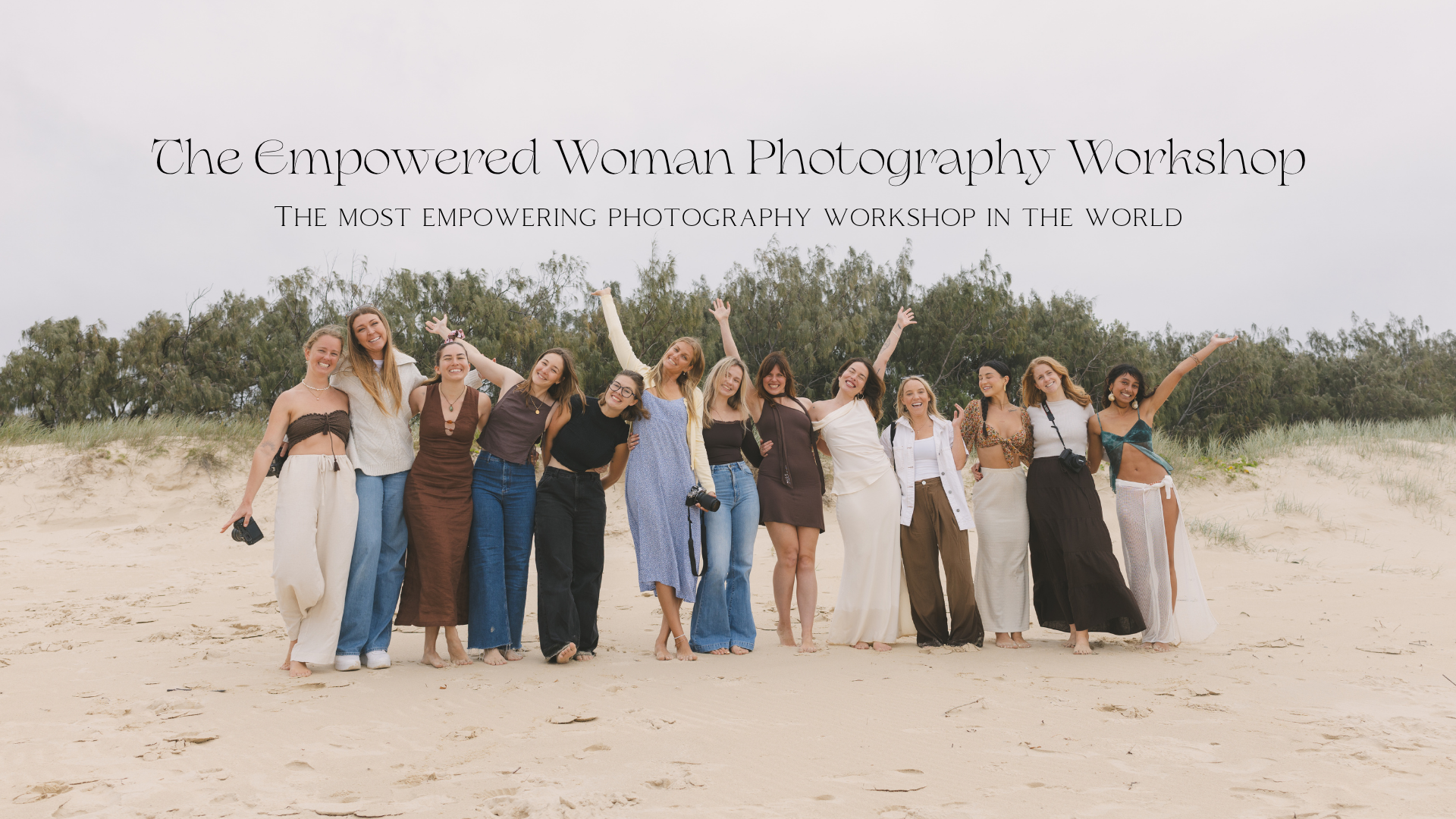
Our photography workshops combine practical, hands on learning with guidance on posing, working with real women, developing your creative eye and taking the steps towards paid photography work.
You do not need to have everything figured out before you begin. You need a willingness to learn, practise and take yourself and your creative work seriously.
If you are already photographing paying clients and are ready for the next stage, there is another question worth asking.
What would change if you knew how to price your work confidently, attract the right clients and build a business around the photography you love?
This is the next chapter of photography education we are exploring through Workshop 2.0, planned for France in June 2027. It is designed for photographers who have already started their businesses and want to focus on consistent bookings, profitability and taking their work to the next level.
We would love to hear what you most want help with. Send us a message and tell us what you are working towards.
Your next step as a photographer
You can be a talented photographer and still have things to learn about running a business. That does not make you any less creative or capable.
It simply means there are skills you have not developed yet.
You do not have to choose between being an artist and being a businesswoman. You can build a business that protects your creativity, supports your life and allows you to do more of the work you love.
Start with one question today: what is the biggest thing standing between where my photography business is now and where I want it to be?
Then take one practical step towards changing it.
And if you would love support along the way, explore our photography education and upcoming workshops at Nami Creative Education.
You have already started creating. Now it is time to learn how to build something with it.
With love,
Nami
Founder of Nami Creative Education